world history and geography modern times textbook pdf

World History and Geography Modern Times Textbook PDF: A Comprehensive Guide
Glencoe’s comprehensive textbook, spanning 830 pages, offers a detailed exploration of modern world history, encompassing student, teacher, and resource volumes for effective learning.
Understanding the Glencoe Textbook

Glencoe’s World History: Modern Times, authored by Jackson J. Spielvogel, is a widely used resource for high school history education. This textbook, available through the Internet Archive, presents a comprehensive narrative of global events from the early modern period to the present day. The complete set comprises eight volumes, each serving a distinct purpose – from the core student edition to specialized resources for teachers, including teaching strategies, interdisciplinary activities, performance assessments, and standardized test preparation.
The textbook’s physical dimensions are 29 cm, and it includes extensive bibliographical references and an index for detailed research. It aims to provide a robust foundation in understanding the complexities of modern world history and geography, making it a valuable tool for both students and educators.

Availability of the PDF Version
The Glencoe World History: Modern Times textbook is accessible as a 2.4G PDF via the Internet Archive, enabling free download and streaming.
Internet Archive as a Source
The Internet Archive serves as a crucial repository for accessing the Glencoe World History: Modern Times textbook in PDF format. This digital library aims to provide universal access to all knowledge, offering a free download, borrow, and streaming option for this valuable resource.
Currently, the archive hosts the textbook, detailing its publication date and encompassing various volumes – from the student edition to unit resources covering both pre-modern and modern periods. The archive’s metadata includes information on the textbook’s size (2.4G) and physical dimensions (29cm), alongside details about its contents, such as bibliographical references and an index.
Furthermore, the Internet Archive supports initiatives like restoring access to books and provides links to related collections like Librivox Free Audio and the Open Library, enhancing the research experience.
Legality and Copyright Considerations
Accessing the Glencoe World History: Modern Times textbook PDF through platforms like the Internet Archive necessitates careful consideration of copyright laws. While the Archive champions open access, users must respect the intellectual property rights of the publisher, Glencoe/McGraw-Hill.
Downloading or distributing copyrighted material without authorization may infringe upon these rights. The availability of the PDF on the Internet Archive doesn’t automatically imply it’s free from copyright restrictions. Users should verify the specific licensing terms associated with the textbook’s digital version.
It’s crucial to utilize the resource responsibly, adhering to fair use guidelines and avoiding any actions that could potentially violate copyright regulations. Always prioritize legal and ethical access to educational materials;

Textbook Content Overview
This textbook meticulously covers modern world history, integrating geographical perspectives across its volumes, from pre-modern times to globalization, totaling 830 pages.
Scope of Modern World History
The Glencoe textbook’s scope encompasses a broad sweep of modern world history, beginning with the pre-modern era and extending through the complexities of globalization. It delves into pivotal periods like the Age of Exploration, the Renaissance, and the Enlightenment, meticulously charting the course of revolutions and their lasting impacts.
Furthermore, the text provides in-depth coverage of imperialism, colonialism, the devastating World Wars, and the subsequent Cold War tensions. It doesn’t shy away from examining the rise of totalitarian regimes and the profound shifts in the post-Cold War landscape. The textbook, spanning xxix, 11, 34, and 830 pages, aims to provide a holistic understanding of the forces that have shaped the modern world, offering a comprehensive narrative for students and educators alike.
Geographical Focus and Integration
This Glencoe textbook seamlessly integrates geographical understanding into the narrative of modern world history. It doesn’t treat geography as a separate entity, but rather as a crucial factor influencing historical events and developments. The 830-page volume likely utilizes maps and geographic data to illustrate the spatial dimensions of historical processes, such as exploration, colonization, and trade routes.
The textbook’s approach likely emphasizes how geographical features – climate, terrain, resources – shaped civilizations and facilitated or hindered interactions between them. Understanding the geographical context is vital for comprehending the causes and consequences of historical events, and this textbook appears designed to foster that understanding, offering a truly global perspective.
Key Themes Explored
The Glencoe textbook delves into pivotal themes shaping the modern world. Expect comprehensive coverage of the Age of Exploration, the transformative Renaissance and Reformation, and the revolutionary Enlightenment period. Imperialism and colonialism, with their lasting global impacts, are undoubtedly central, alongside detailed analyses of both World Wars and the ensuing Cold War.
Furthermore, the textbook likely examines the rise of totalitarian regimes, the complexities of the interwar period, and the forces driving post-Cold War globalization. These themes are interwoven with geographical considerations, offering a holistic understanding of historical developments. The 830 pages suggest a nuanced exploration of these interconnected topics, providing a robust foundation in modern world history.

Detailed Breakdown of Textbook Volumes
This textbook series comprises eight volumes: student editions, teacher resources, teaching strategies, interdisciplinary activities, assessments, test skills, and unit-specific resources.
Volume 1: Student Edition
The primary Student Edition serves as the foundational text for exploring modern world history. This volume, meticulously crafted by Jackson J. Spielvogel, delivers a comprehensive narrative, spanning significant eras and events. It’s designed to engage students with detailed accounts, insightful analyses, and visually appealing elements.
Containing xxix introductory pages, 11 pages of preliminary material, and 34 pages of additional content, it lays the groundwork for understanding complex historical processes. The core of this volume, encompassing 830 pages, delves into the intricacies of global developments, providing students with a robust understanding of the forces that have shaped the modern world. It includes bibliographical references and a comprehensive index for further research and study.
Volume 2: Teacher’s Edition
Designed to accompany the Student Edition, the Teacher’s Edition provides educators with invaluable resources for effective instruction. While specific page counts aren’t detailed beyond the overall textbook size of 830 pages, this volume offers comprehensive support, including lesson plans, assessment tools, and differentiated instruction strategies.
It’s intended to facilitate a dynamic learning environment, enabling teachers to cater to diverse student needs and learning styles. The Teacher’s Edition likely includes annotated student edition pages, answer keys, and suggestions for enrichment activities. It’s a crucial component for maximizing student engagement and comprehension of the complex topics covered in modern world history, ensuring a well-rounded educational experience.
Volume 3: Teaching Strategies
Volume 3 focuses specifically on pedagogical approaches for delivering impactful world history lessons. This resource, part of the larger Glencoe textbook suite, details strategies for the World History classroom, including activities tailored for block scheduling and pacing guides to ensure comprehensive coverage.
It aims to equip educators with innovative methods to engage students and foster a deeper understanding of historical events and geographical contexts. Expect to find techniques for differentiated instruction, collaborative learning, and incorporating primary sources. This volume is designed to move beyond traditional lecturing, promoting active learning and critical thinking skills within the modern world history curriculum.
Volume 4: Interdisciplinary Strategies
Volume 4 of the Glencoe textbook series concentrates on weaving world history into other academic disciplines. This resource provides team-teaching strategies and activities designed to connect historical events with subjects like literature, art, music, and social studies.
It encourages educators to explore the interconnectedness of knowledge, fostering a more holistic learning experience for students. Expect to find collaborative lesson plans, project ideas, and assessment tools that bridge the gap between history and other fields. The goal is to demonstrate how historical events shaped, and were shaped by, cultural, artistic, and societal developments, enriching understanding.
Volume 5: Performance Assessment
Volume 5 of this Glencoe series focuses on evaluating student understanding through performance-based tasks. It provides a collection of activities and accompanying rubrics designed to assess students’ ability to apply historical knowledge and skills in meaningful ways.
These assessments move beyond traditional tests and quizzes, encouraging students to demonstrate their learning through projects, presentations, debates, and research papers. The included rubrics offer clear criteria for evaluating student work, ensuring fair and consistent grading. This volume aims to measure not just what students know, but what they can do with their historical understanding.
Volume 6: Standardized Test Skills
Volume 6 is specifically designed to prepare students for standardized tests in world history. This teacher-annotated edition provides targeted practice and strategies to improve test-taking skills. It focuses on the types of questions commonly found on standardized assessments, helping students become familiar with the format and demands of these exams.
The workbook includes practice questions, answer explanations, and test-taking tips. It aims to build students’ confidence and proficiency in areas such as document analysis, interpreting maps, and understanding historical timelines. This volume is a valuable resource for teachers looking to enhance their students’ performance on high-stakes tests.
Volumes 7 & 8: Unit Resources (Pre-Modern & Modern)
Volumes 7 and 8 serve as comprehensive unit resource collections, dividing historical study into pre-modern and modern periods. These volumes provide teachers with supplementary materials to enrich their lessons and cater to diverse learning styles. They include a wealth of activities, assessments, and primary source documents designed to deepen student understanding.
These resources support both traditional and block scheduling approaches, offering pacing guides and flexible activities. Volume 7 focuses on the world before modern times, while Volume 8 delves into the complexities of the modern era. Together, they offer a robust toolkit for educators seeking to create engaging and effective history lessons.

Specific Topics Covered in the Textbook
This textbook meticulously examines pivotal eras – from the Age of Exploration and Renaissance to the Cold War and Globalization – offering a broad historical perspective.
The Age of Exploration
The textbook’s coverage of the Age of Exploration delves into the motivations behind European voyages, examining economic desires for new trade routes and the spread of influence. It details the technological advancements – like improved shipbuilding and navigational tools – that enabled these journeys.
Students will learn about key explorers such as Columbus, Magellan, and Vasco da Gama, and the impact of their discoveries on global interactions. The text analyzes the Columbian Exchange, highlighting the transfer of plants, animals, diseases, and cultures between the Old and New Worlds.
Furthermore, the textbook critically assesses the consequences of exploration, including the establishment of colonial empires, the exploitation of indigenous populations, and the beginnings of global trade networks, setting the stage for modern world history.
The Renaissance and Reformation
The Glencoe textbook meticulously examines the Renaissance, tracing its origins in Italy and its spread throughout Europe. It highlights the renewed interest in classical art, literature, and philosophy, and the rise of humanism as a dominant intellectual movement. Key figures like Leonardo da Vinci, Michelangelo, and Shakespeare are profiled, showcasing their contributions to art, science, and literature.
The Reformation is presented as a direct challenge to the authority of the Catholic Church, focusing on Martin Luther’s 95 Theses and the subsequent emergence of Protestantism.

The text analyzes the religious and political consequences of the Reformation, including the Wars of Religion and the reshaping of the European map, profoundly impacting the course of modern history.
The Enlightenment and Revolutions
The Glencoe textbook dedicates significant coverage to the Enlightenment, exploring its core tenets of reason, individualism, and skepticism. It details the influential thinkers of the era – Locke, Rousseau, Montesquieu – and their impact on political and social thought. The text emphasizes how Enlightenment ideas fueled revolutionary movements across the globe.
Specifically, the American and French Revolutions are analyzed in depth, examining their causes, key events, and lasting consequences. The textbook explores the concepts of natural rights, popular sovereignty, and the separation of powers.
Furthermore, it investigates how these revolutions inspired subsequent movements for independence and reform throughout the 19th and 20th centuries.
Imperialism and Colonialism
The Glencoe textbook provides a thorough examination of 19th and 20th-century imperialism, detailing the motivations behind European expansion – economic, political, and cultural. It analyzes the various forms of colonial control, from direct rule to protectorates and spheres of influence, across Africa, Asia, and the Pacific.
The text explores the impact of imperialism on colonized societies, including the exploitation of resources, the disruption of traditional social structures, and the rise of nationalist movements. It investigates the Berlin Conference and the “Scramble for Africa,” highlighting the arbitrary nature of colonial boundaries.
Moreover, the textbook addresses the legacies of colonialism, including post-colonial conflicts and ongoing economic inequalities.
World War I and its Aftermath
The Glencoe textbook delivers an in-depth analysis of World War I, covering its complex causes – militarism, alliances, imperialism, and nationalism – and the key events of the conflict, from the assassination of Archduke Franz Ferdinand to the Treaty of Versailles.
It details the brutal trench warfare, the introduction of new technologies, and the war’s devastating impact on both soldiers and civilians. The textbook examines the collapse of empires – Ottoman, Austro-Hungarian, Russian – and the redrawing of the European map.
Furthermore, the text explores the Treaty of Versailles’s harsh terms and its contribution to future instability, setting the stage for subsequent conflicts.
The Interwar Period and Rise of Totalitarianism
The Glencoe textbook meticulously examines the turbulent interwar period, highlighting the economic hardships following World War I, including the Great Depression, and their impact on global politics. It details the rise of extremist ideologies – fascism in Italy, Nazism in Germany, and Stalinism in the Soviet Union – and analyzes the factors contributing to their appeal.
The text explores the characteristics of totalitarian regimes: centralized control, suppression of dissent, and aggressive nationalism. It investigates the policies and actions of key leaders like Mussolini, Hitler, and Stalin, and their pursuit of expansionist agendas.
Moreover, the textbook analyzes the failures of the League of Nations to prevent aggression and maintain international peace.
World War II and the Cold War
The Glencoe textbook provides an in-depth analysis of World War II, covering its origins in unresolved issues from WWI, the rise of aggressive powers, and the key events of the conflict across Europe, Asia, and Africa. It details the Holocaust, the atomic bombings of Hiroshima and Nagasaki, and the war’s devastating consequences.
Following WWII, the textbook thoroughly examines the emergence of the Cold War, the ideological clash between the United States and the Soviet Union, and the formation of opposing alliances – NATO and the Warsaw Pact.
It further explores proxy wars, the arms race, and the constant threat of nuclear annihilation that defined this era.
Post-Cold War Era and Globalization
The Glencoe textbook meticulously details the collapse of the Soviet Union and the end of the Cold War, analyzing the factors contributing to this monumental shift in global power dynamics. It explores the emergence of the United States as a sole superpower and the subsequent reshaping of the international order.
A significant focus is placed on the rise of globalization – the increasing interconnectedness of nations through trade, technology, and cultural exchange. The textbook examines the benefits and drawbacks of globalization, including economic growth, increased inequality, and cultural homogenization.
Furthermore, it covers contemporary issues like terrorism, regional conflicts, and the evolving role of international organizations.
Utilizing the Textbook for Study
Effectively leverage maps, primary sources, and strategic reading techniques within the Glencoe textbook to enhance comprehension and excel in assessments.
Effective Reading Strategies
To maximize comprehension of this extensive textbook, employ active reading strategies. Begin by previewing chapter headings and subheadings to grasp the overall structure. Focus on identifying key themes and arguments presented within each section. Utilize the SQ3R method – Survey, Question, Read, Recite, and Review – to actively engage with the material.
Annotate the text, highlighting important concepts and noting connections between different events and periods. Pay close attention to timelines and geographical information, as these are crucial for understanding historical context. Don’t hesitate to reread challenging passages and consult external resources for clarification. Regularly summarize key points in your own words to reinforce learning and improve retention.
Using Maps and Geographic Data
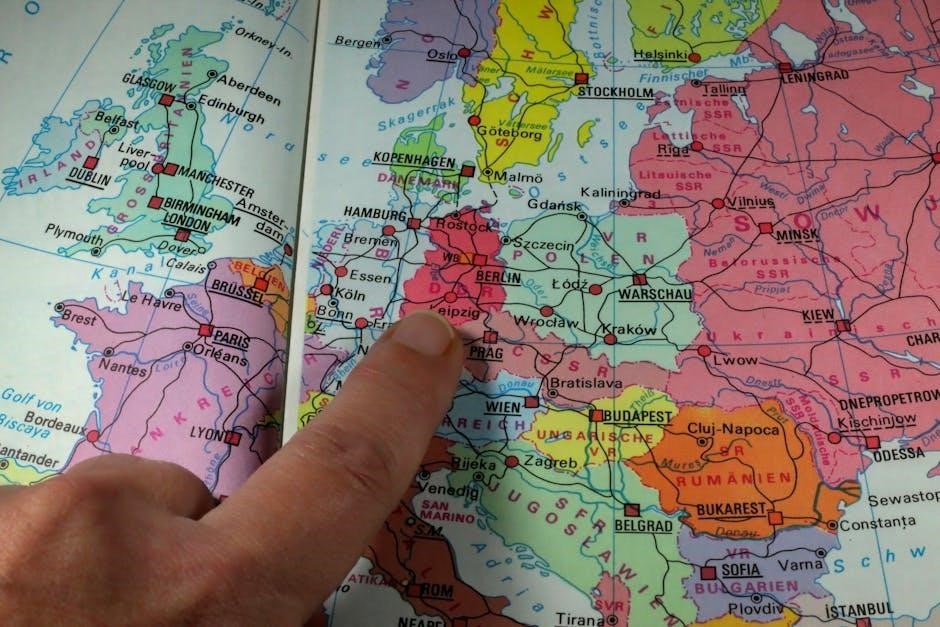
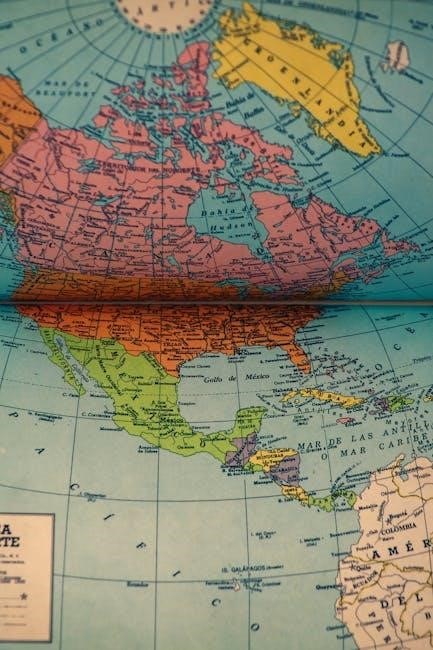
This textbook intricately weaves geography into the narrative of modern world history. Actively study the included maps, noting territorial changes, trade routes, and the physical features influencing historical events. Consider how geographical factors – climate, resources, and terrain – shaped civilizations and conflicts.
Analyze the spatial relationships between different regions and empires. Trace the spread of ideas, technologies, and diseases along established routes. Utilize digital mapping tools to supplement the textbook’s maps, exploring interactive visualizations and satellite imagery. Understanding the ‘where’ is as crucial as understanding the ‘when’ and ‘why’ in historical analysis.
Analyzing Primary Source Documents
The Glencoe textbook likely incorporates primary source excerpts – firsthand accounts from historical figures. When encountering these, critically assess the author’s perspective, intended audience, and potential biases. Consider the historical context in which the document was created; what events were unfolding, and how might they have influenced the author’s viewpoint?
Examine the document’s purpose: was it meant to inform, persuade, or record? Cross-reference primary sources with secondary interpretations to gain a more nuanced understanding of events. Look for corroborating evidence and conflicting accounts. Developing these analytical skills is vital for interpreting history beyond the textbook’s narrative.
Preparing for Assessments
Utilizing the Glencoe textbook’s resources, effective assessment preparation involves reviewing chapter summaries, key terms, and timelines. The textbook’s Volume 6 specifically focuses on standardized test skills, offering practice questions and annotated teacher editions for guidance.
Practice identifying cause-and-effect relationships, analyzing historical arguments, and interpreting maps – skills crucial for success. Review performance assessment activities (Volume 5) to understand expectations. Don’t simply memorize facts; focus on understanding the broader historical context and connections between events. Regularly test yourself using the textbook’s review questions and online supplementary materials.
Alternative Resources and Supplements
Expand learning with online history databases, digital mapping tools, and historical document repositories like the Internet Archive for enriched study.
Online History Databases
Numerous online history databases supplement the Glencoe World History: Modern Times textbook, offering diverse perspectives and primary source materials. The Internet Archive, for example, provides access to digitized books, including the textbook itself, fostering research opportunities.
Open Library, also part of the Internet Archive, expands access to a vast collection of texts. Researchers can explore related topics and gain deeper insights into historical events. Furthermore, resources like the Metropolitan Museum and Cleveland Museum of Art offer visual context, enriching understanding of different cultures and periods.
These digital resources complement traditional learning, providing students with a broader range of materials for analysis and critical thinking, enhancing their overall comprehension of modern world history.
Digital Mapping Tools
Integrating geographical understanding is crucial when studying Glencoe World History: Modern Times. Digital mapping tools significantly enhance this aspect of learning, allowing students to visualize historical events within their spatial context. These tools move beyond static textbook maps, offering interactive exploration of empires, trade routes, and migration patterns.
Utilizing these resources, students can analyze how geography influenced historical developments, such as the Age of Exploration or the impact of colonialism. The Wayback Machine, while not a mapping tool itself, preserves historical web content, potentially including older digital maps.
Furthermore, modern GIS software and online mapping platforms provide dynamic ways to investigate the relationship between geography and historical change, enriching the textbook’s content.
Historical Document Repositories
Supplementing Glencoe World History: Modern Times with primary source materials is vital for in-depth understanding. The Internet Archive serves as a valuable repository, offering access to digitized historical documents, potentially including materials related to the textbook’s content. These repositories provide firsthand accounts, official records, and diverse perspectives often absent from textbooks.
Students can analyze these sources to critically evaluate historical narratives and develop their own interpretations. The Archive’s vast collection, encompassing over a trillion web pages, may contain relevant materials.
Exploring such repositories enhances research skills and fosters a deeper connection with the past, complementing the textbook’s overview of modern world history.